How to Prepare a Cedar Park Property for an Estate Gate

Start With the Opening and the Approach

Preparation starts with measuring the opening and the ground on both sides of it. A wide double leaf gate needs level clearance equal to the full width of each leaf, and the approach needs room for a vehicle to pull fully off the road while the gate opens. Cedar Park, TX owners can compare gate work against the list at estate gates cedar park bad dog tavern.
Walk the drive from the road to the house. Note where it climbs, where it dips, and where water runs after a storm, because all three change where posts, hinges, and operators belong.
Check the Slope Across the Swing Arc
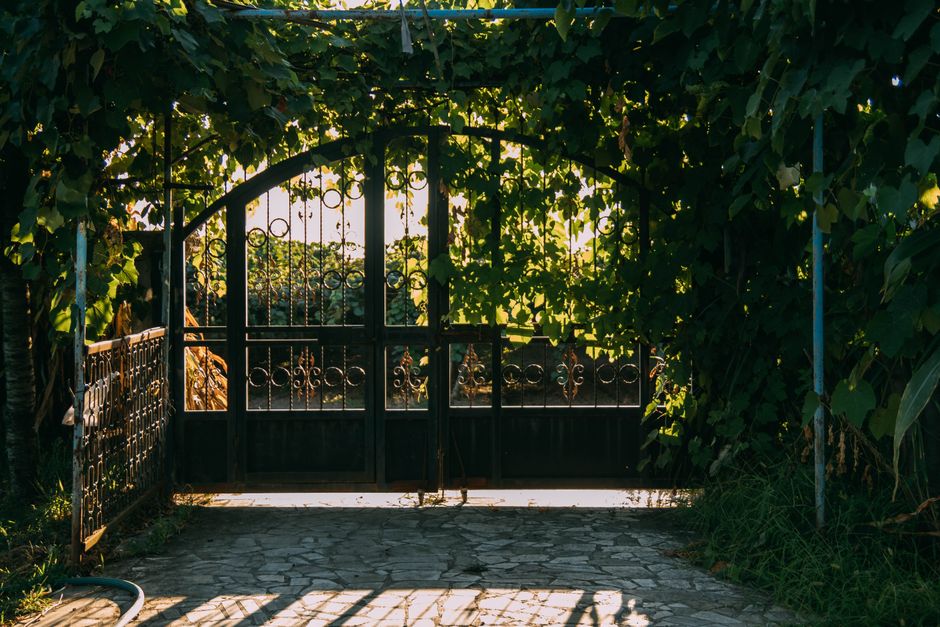
Slope is the measurement that surprises owners most. On hill country lots near Brushy Creek Lake Park and toward Leander, a drive often rises as it enters the property, and an inward swinging leaf will strike the ground partway through its arc.
Set a straightedge at the hinge line and measure how quickly the ground climbs across the arc. That single number tells a builder whether the gate needs a raked bottom rail, rising hinges, or a different layout.
Know What Is in the Soil
Limestone soil in Williamson County is rocky in places and clay-rich in others. Rock slows drilling and may call for different equipment, while clay swells when wet and shrinks when dry, which moves post footings over the years.
Tell the builder what the ground is like along the fence line. If a past fence post or mailbox has leaned or heaved, that is useful evidence of how the soil behaves at that spot.
Clear and Mark the Work Area
Remove anything in the swing path, including planters, vehicles, low branches, and loose stone. Mark the sprinkler lines, utility boxes, and any buried lines near the posts so footings and trenches avoid them.
- Trim branches that sweep across the leaf path or shade the operator panel.
- Move parked vehicles and stored material away from the entrance.
- Mark irrigation heads and valve boxes along the fence line.
- Confirm where underground utilities cross the drive before any digging starts.
Plan Power and Controls Early
An automatic estate gate needs power at the posts and a path for control wiring back to the house. On a long drive that run can be considerable, so the trench route, conduit size, and a backup battery or solar option are worth deciding before the gate is designed.
Think about the intercom and access control too. The pedestal or keypad needs a spot where a driver can reach it without leaving the vehicle, and the wiring to it should be planned with the main power run.
Decide What Else Belongs in the Entrance
Large entrances often include stone or masonry columns, a mailbox, lighting, and fence runs that match the gate. Deciding these together lets the builder size the posts correctly and avoid cutting into finished work later.
A heavy gate should never hang from a thin veneer over a column. Hinges and operator brackets belong on structural steel or a solid footing designed for the load.
Gather the Questions
Before the first visit, write down the height wanted, the style, the finish color, how many vehicles pass through, and whether a separate walk-through gate is needed. A builder can then turn measurements into a design that fits the property and the weather, not just a catalog photo.